this is not a video game
It's a new way of making music
compose here
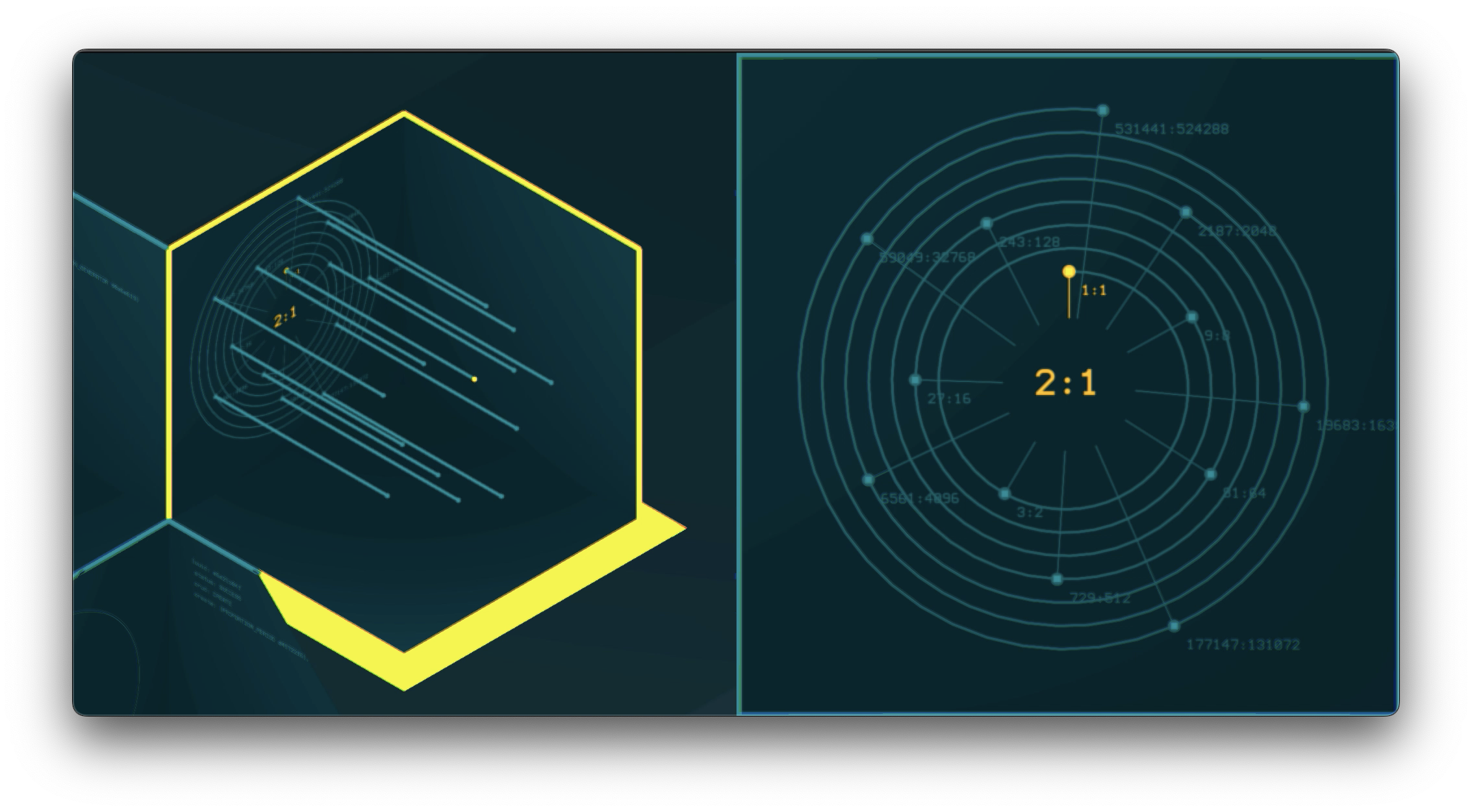
A composition-first music environment
DAWs are where music gets finished. This is where music gets figured out.
This is a space for thinking, experimenting, and planning.
Built-in sounds let you hear ideas immediately as you work.
play here
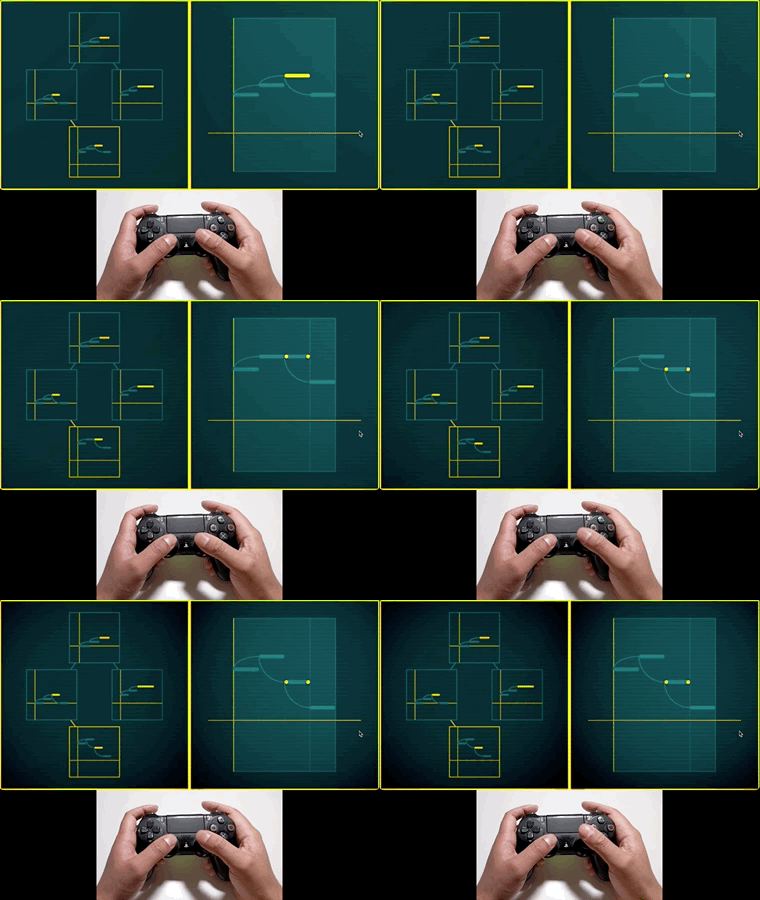
Inspired by video games
Music software doesn’t have to think like a recording studio.
Nowadays, a musician is more likely to have played Minecraft than sat behind a mixing desk. Our interface is designed for game-controller and WASD-keys as the primary input. Eventually, this will run on games consoles, as well as MacOS, Windows and Linux.
game here
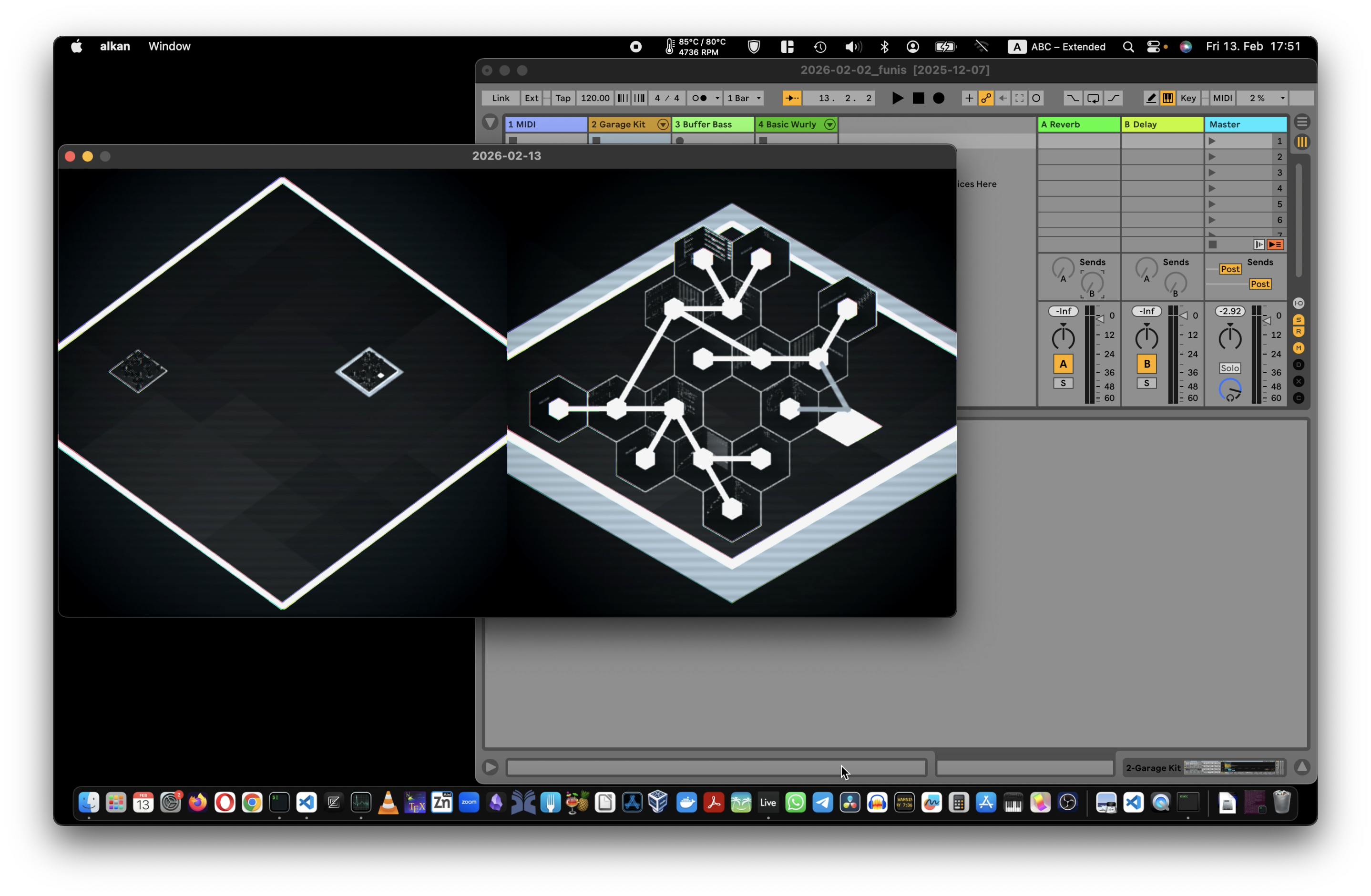
Use 3D space to help organize your thoughts.
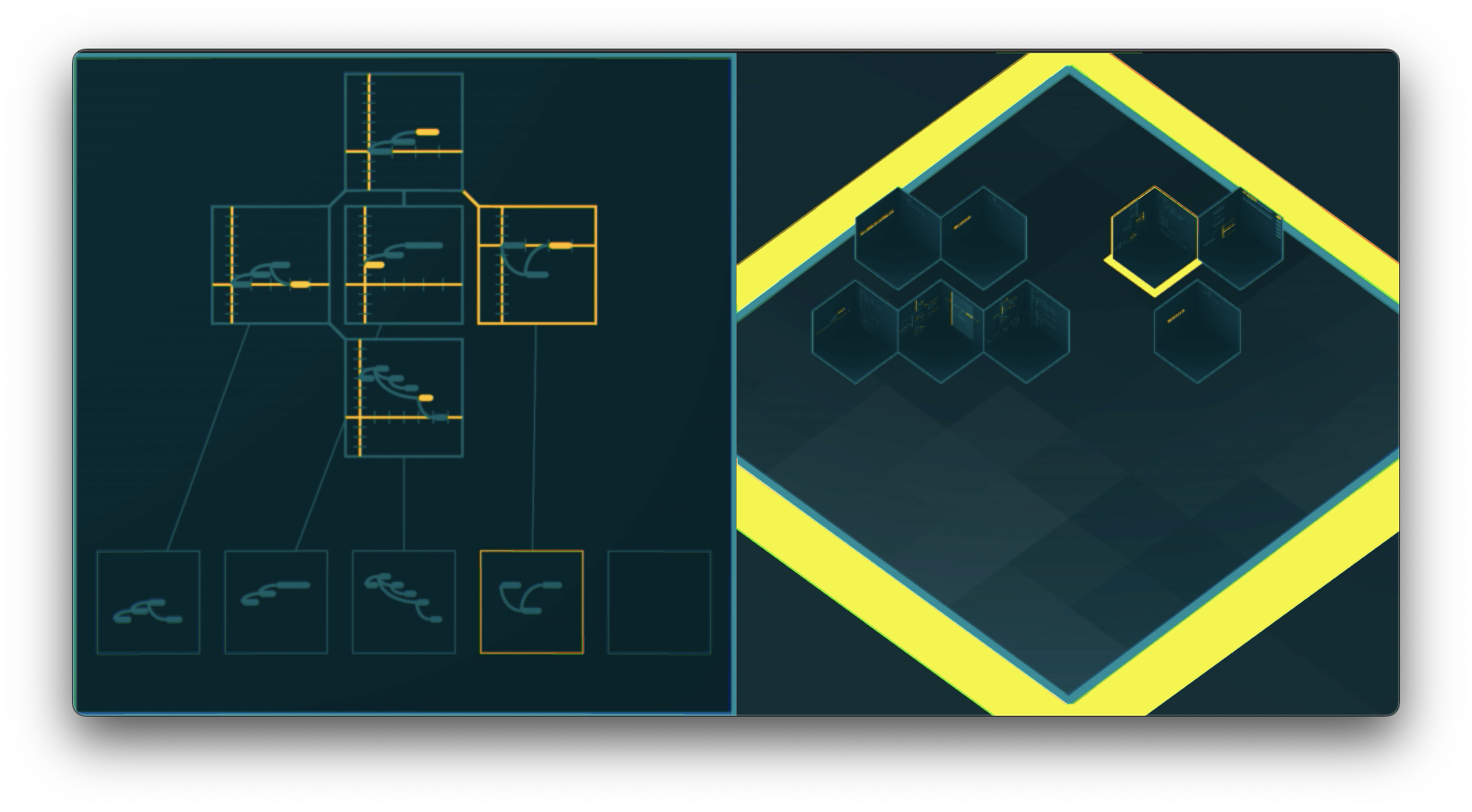
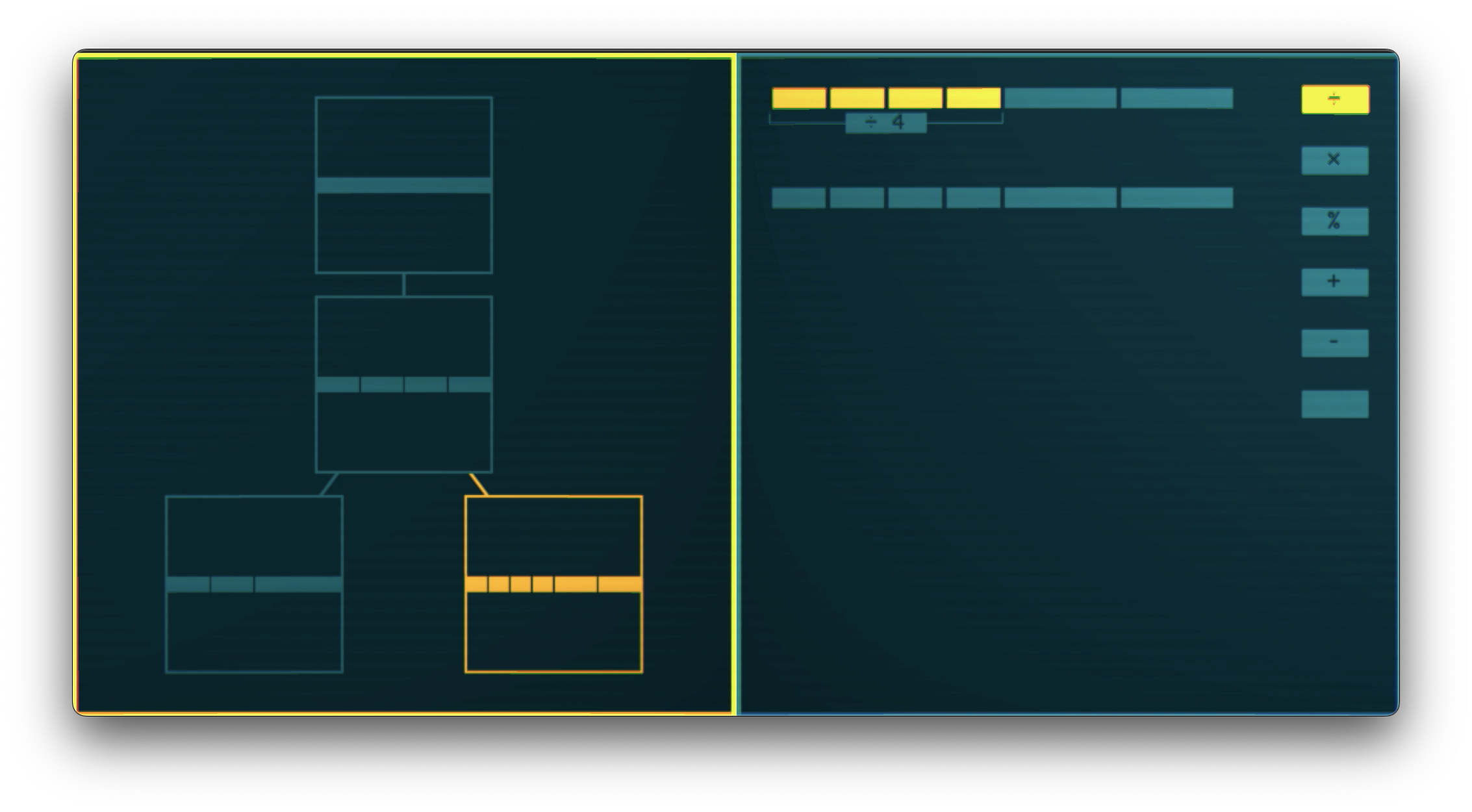
Musical objects (a melody, rhythm, tuning system etc.) are represented by boxes on a plateau. Connecting two compatible boxes together creates a new box, that can be connected to further boxes, and so on. You “craft” your music by combining musical elements, just like a survival game. And if you run out of room, you can inifinitely nest the 3D spaces.
conceptualize here
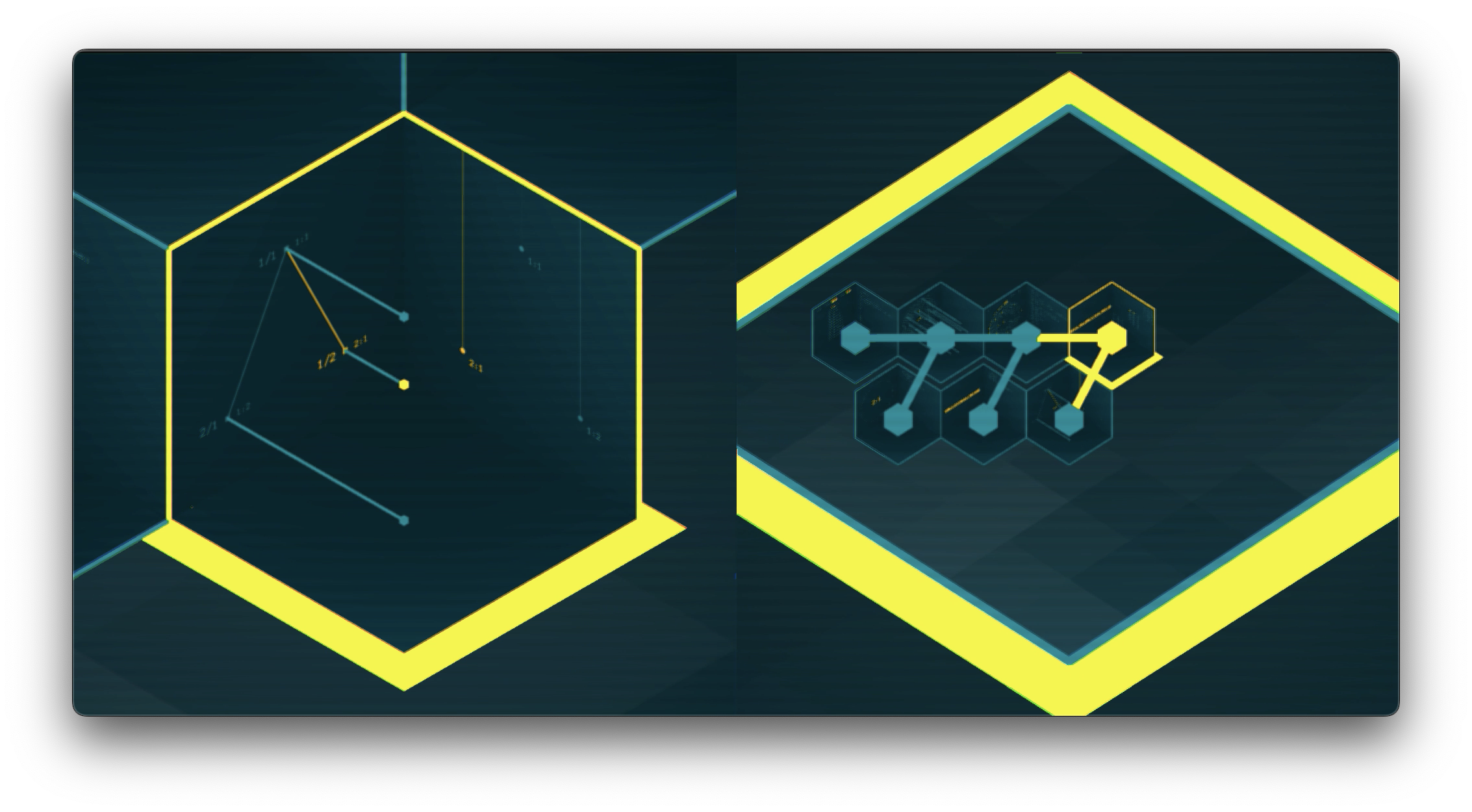
A place to dream about music
At the heart of the software is a highly sophisticated musical representation engine, built from the ground up to be able to handle as many different types of music as possible.
We treat music as a system of relationships, rather than a sequence of disconnected events.
variation here
Everything is connected
A “pitch” to us is always “higher than” or “lower than” another pitch, never just an isolated MIDI number.
This allows us to create a deep variation system, that tracks and reacts to how music changes. A melodic idea can generate a family of variations.
Change the source, and everything updates instantly.
structure here
Tools for form
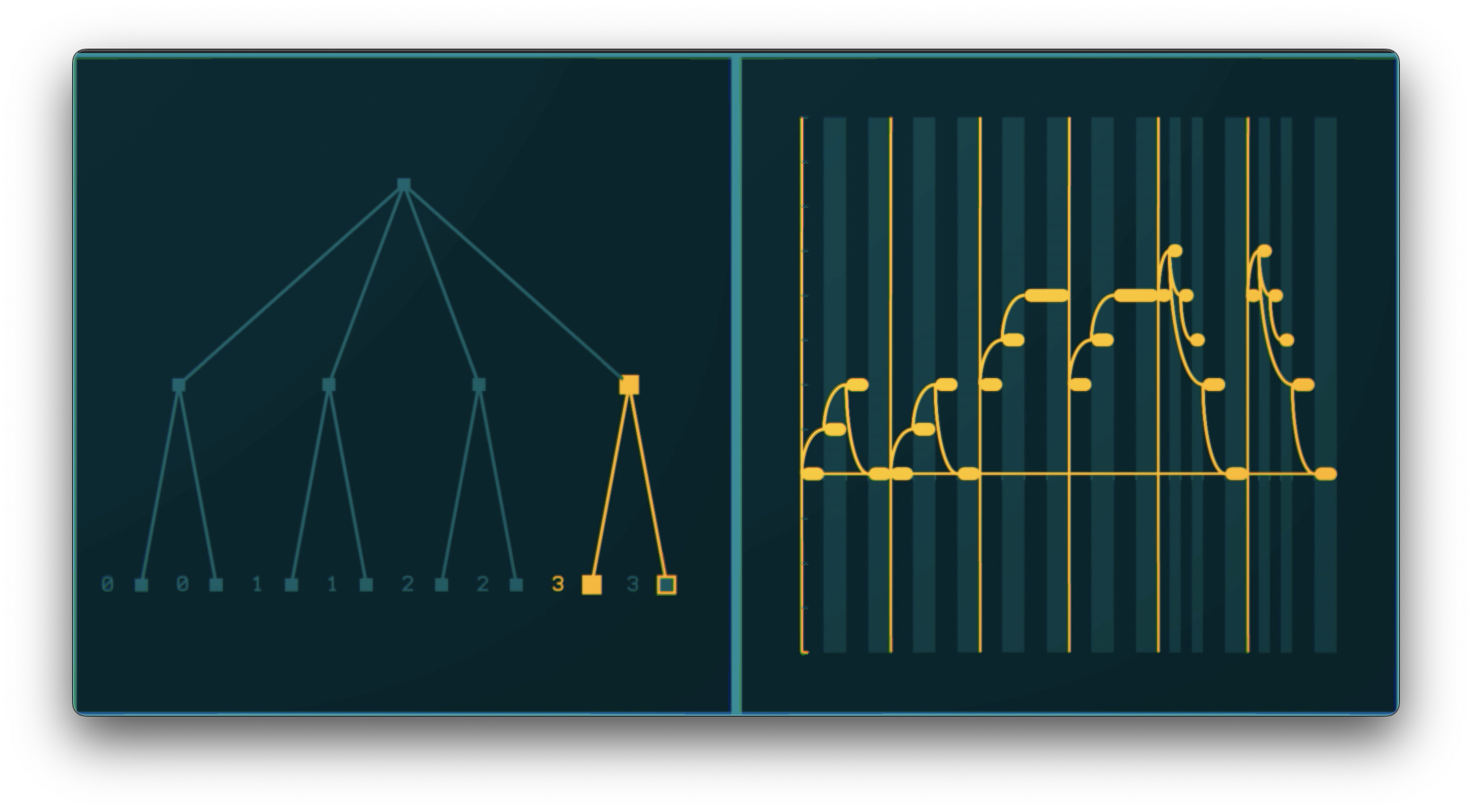
Form is never a case of copy-paste. Each repetition knows where it came from and how it relates to what came before.
Musical ideas can be built, connected, reused, and transformed, with changes propagating instantly across the whole piece. Here, music is a system.
music theories here
There's more than one way to make music
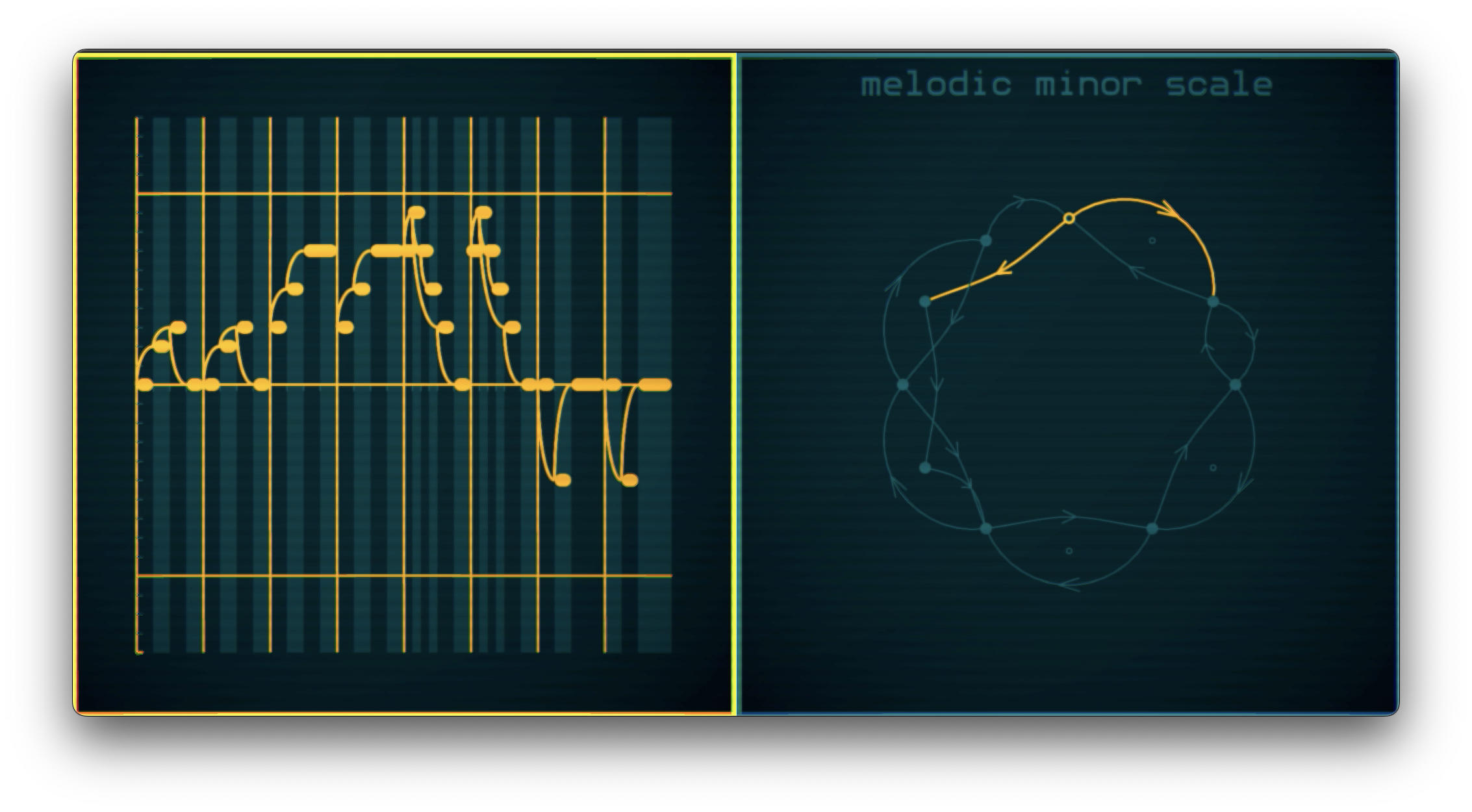
We don’t think of music theory. We think of music theories.
We don’t just support one way of thinking, making and dreaming about music.
There is no single musical tradition assumed here. No default tempo. No fixed meter. No privileged tuning system.
Music software is used all over the world. We design with a global audience in mind.
efficiency here
Fast, small, powerful
The software is small, efficient, and optimized.
It is designed to be run alongside your DAW, so it does not hog resources. It is less than 20MB on disk.
produce there
Communicates effortlessly with your DAW of choice
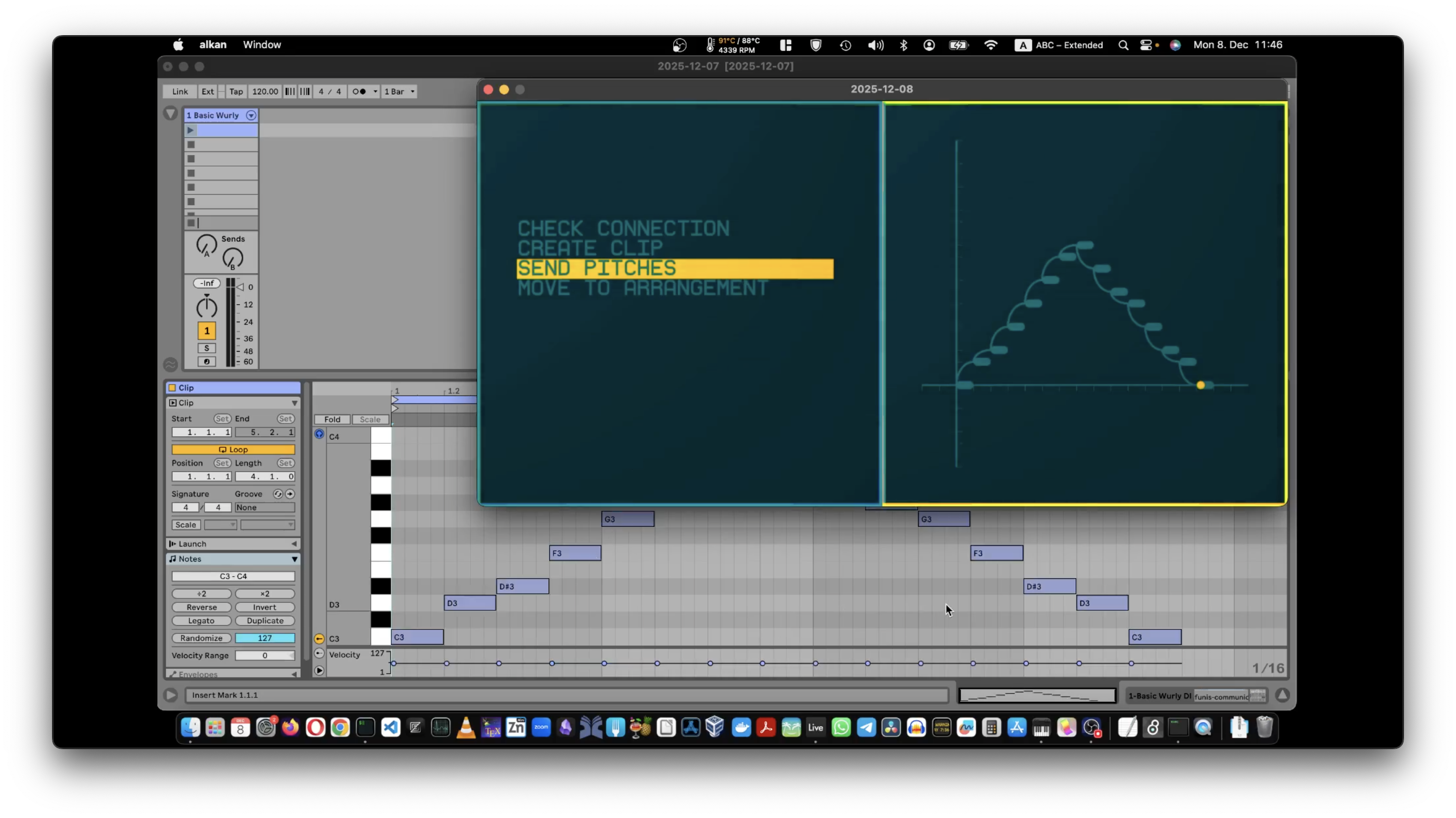
Designed to work alongside Ableton Live, Logic, Cubase, Reaper, or Bitwig, not replace them.
When you're ready for detailed sound design, mixing, or production, seamlessly handoff your work to your favourite DAW via Open Sound Control, TCP and HTTP.
tweak there
Endless number boxes are not our style
We're more interested in the bigger musical picture. Less numbers, less fiddly knobs, less decimal values.
No right-clicks. No menus buried three levels deep. Just like a video game, you learn the logic of this world through interaction, not UI clutter.
timelines there
Sometimes music isn't linear
Tracks, timelines, mixer channels, and parameter dials all make sense if your goal is to record and polish sound. But composition - the shaping of musical ideas - is better suited to happen elsewhere.
defaults there
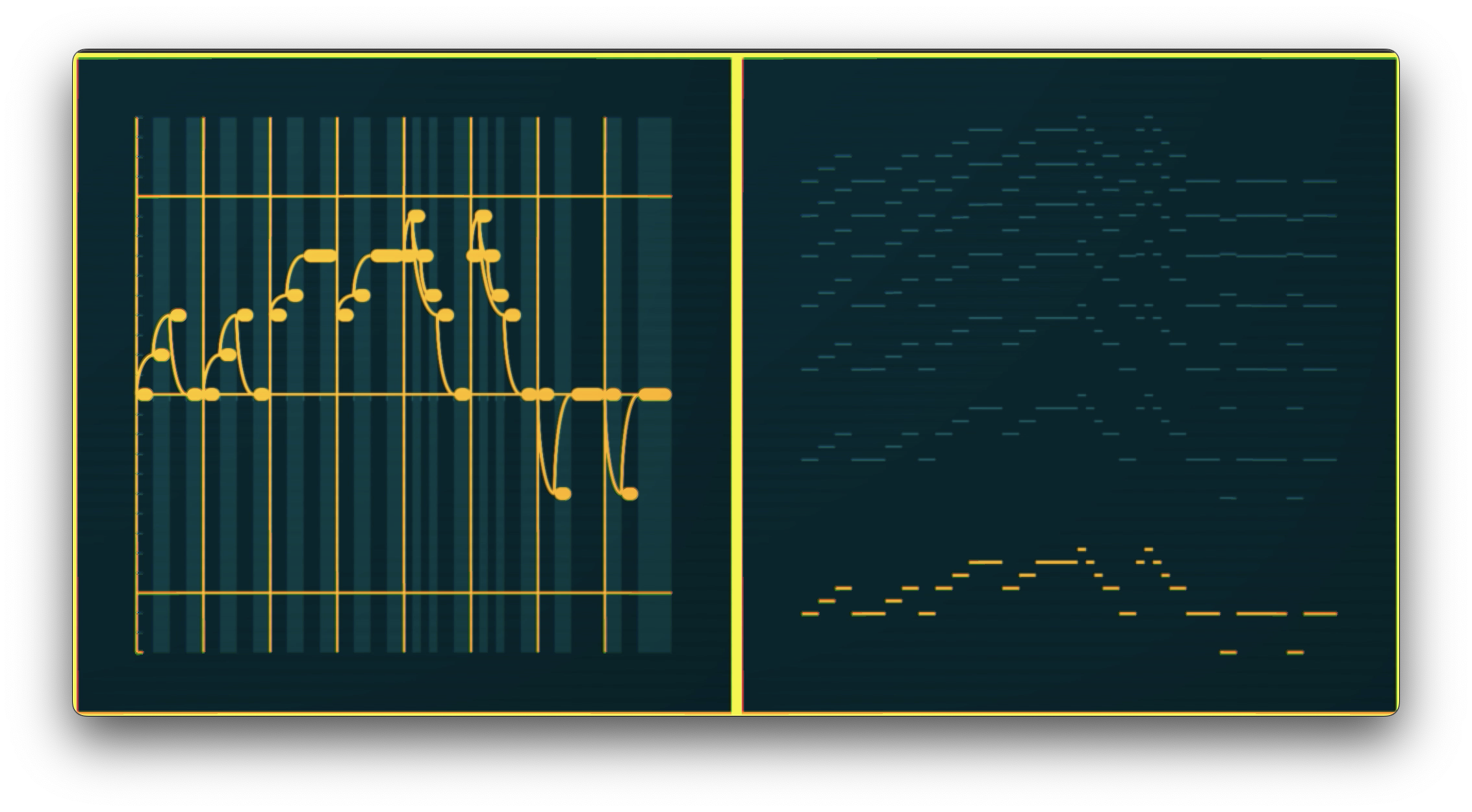
Don't take anything for granted
Tempo. Bars. Metre. Equal temperament: These aren’t laws of music - they’re cultural conveniences.
We don’t have piano rolls. We have instrument rolls.
We give the tools to recreate and actively interact with the musical elements of many different sonic cultures, not just relegate them to an exoticized entry in a drop-down menu.
bloat there
CPU-friendy
As standalone software, it can run on lower-powered machines that more bloated software would struggle on.
This efficiency makes it suitable for platforms that most music software ignores.